World AIDS Day
Introduction
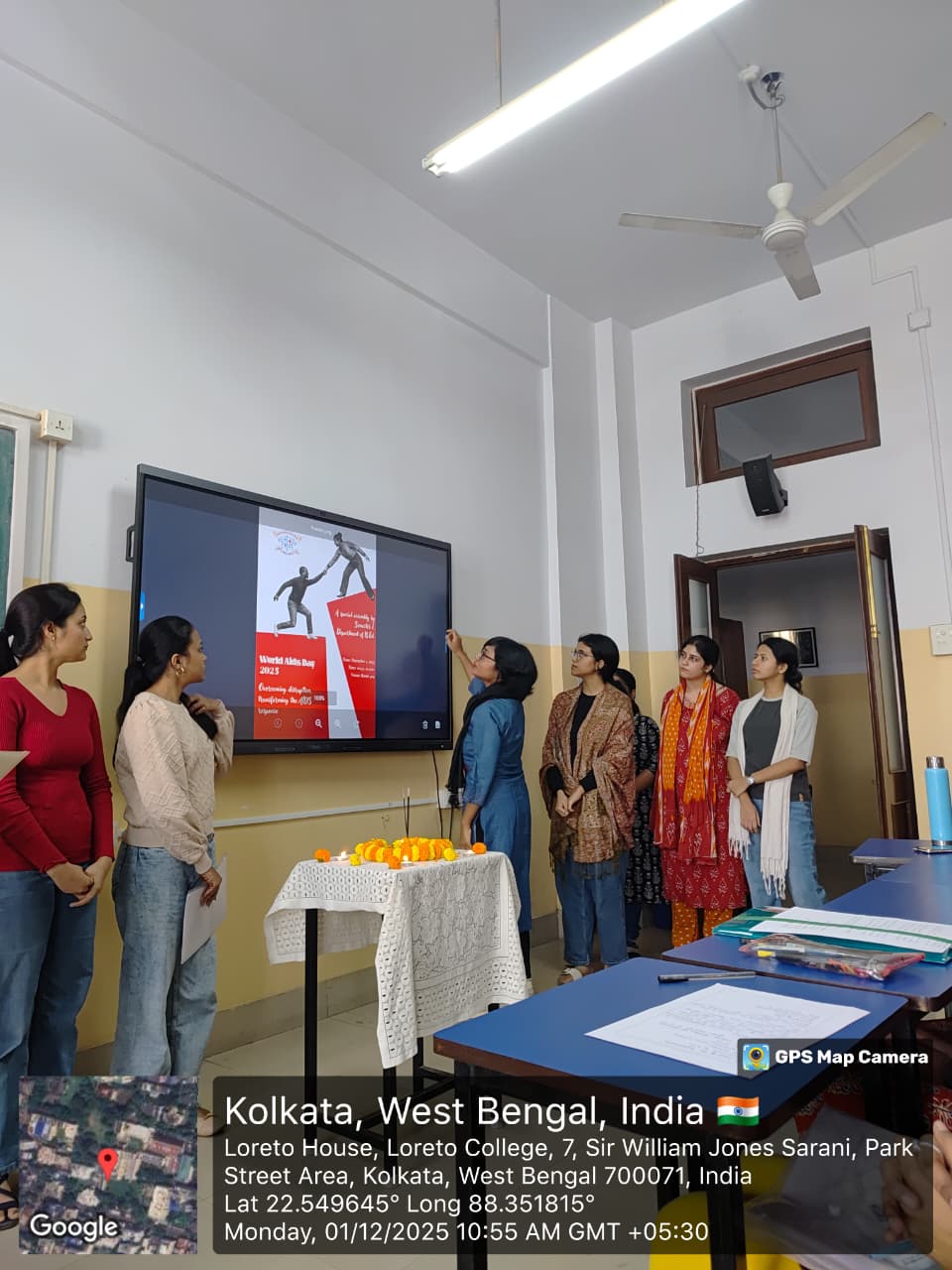
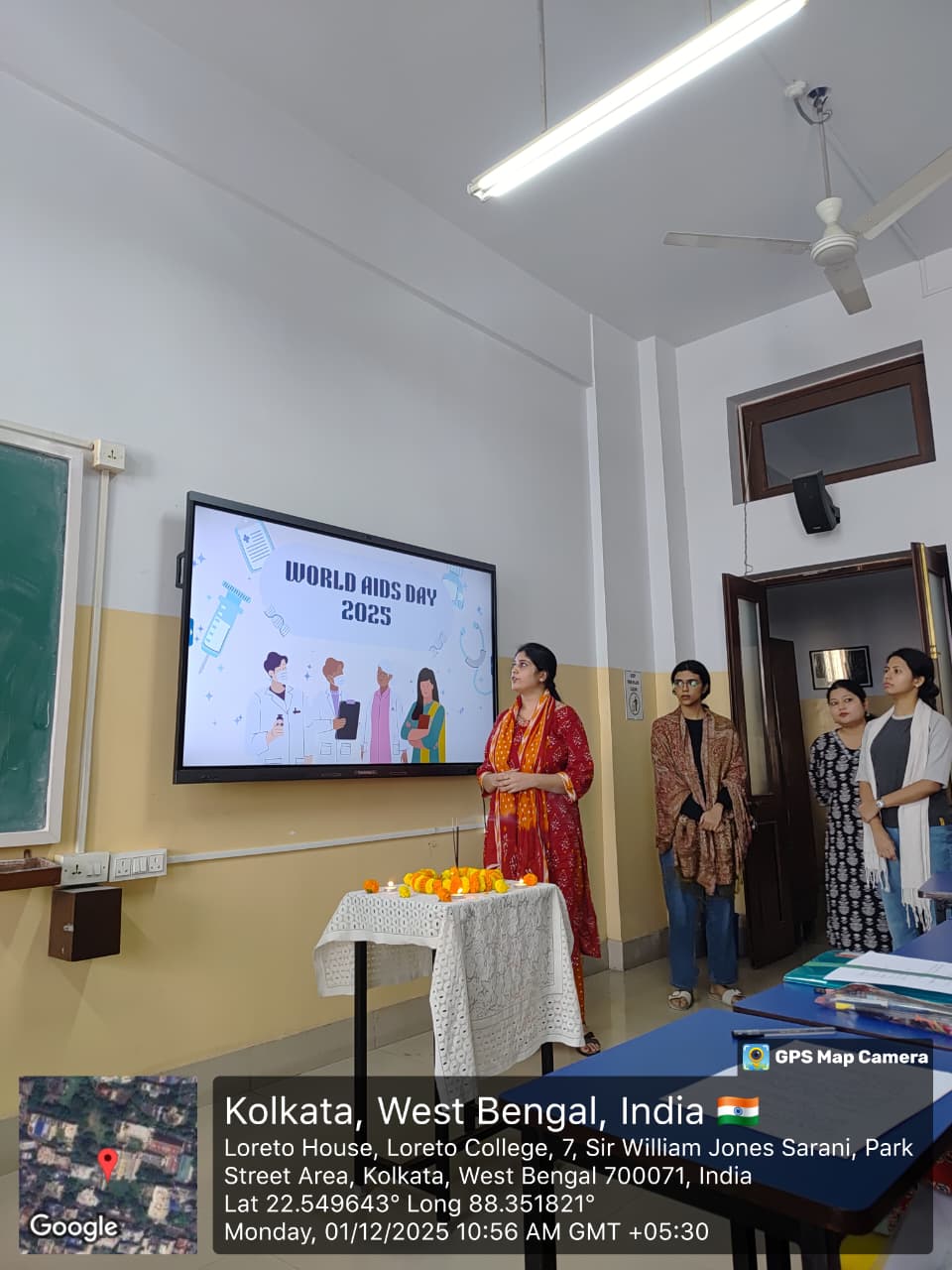
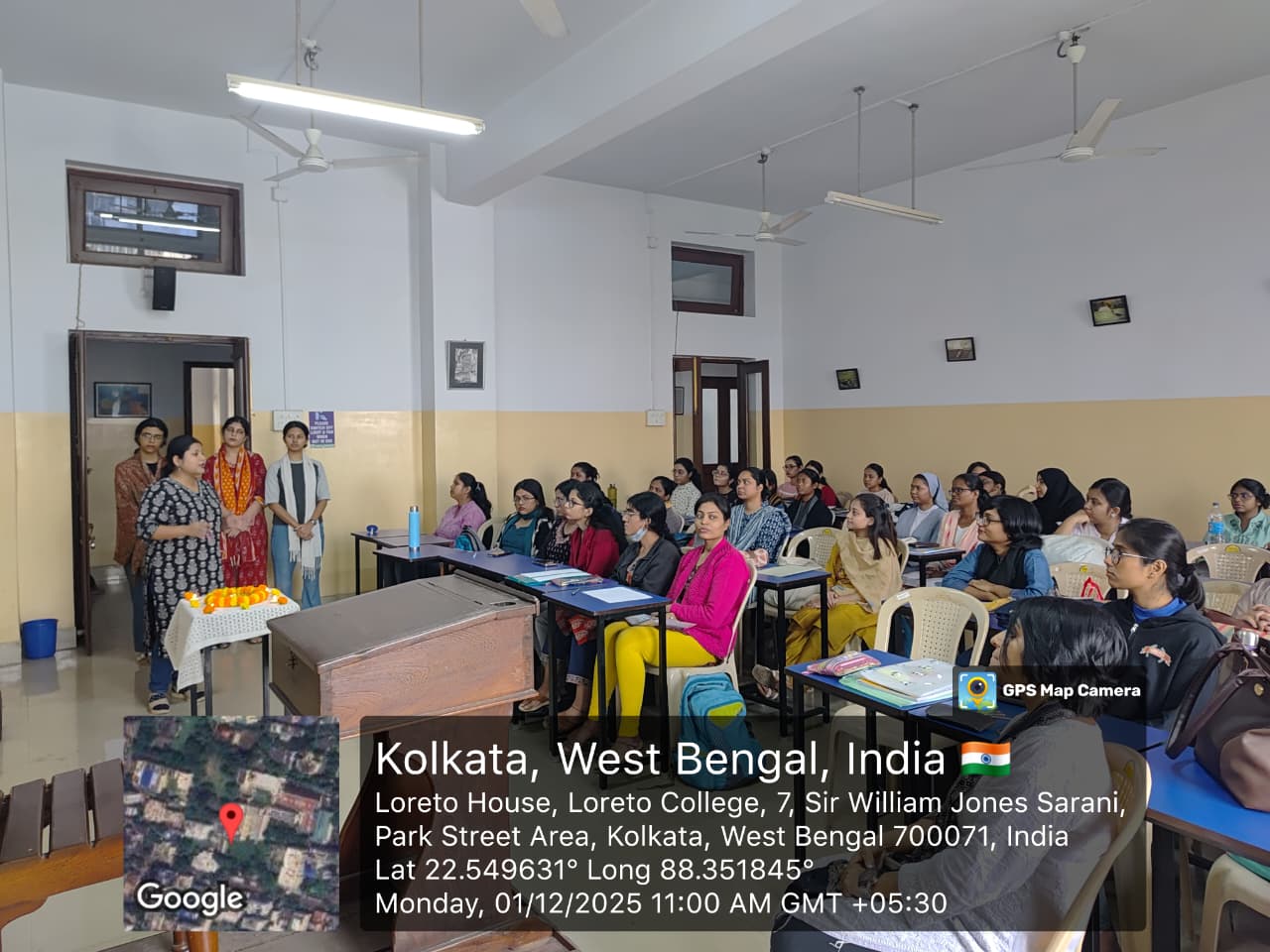
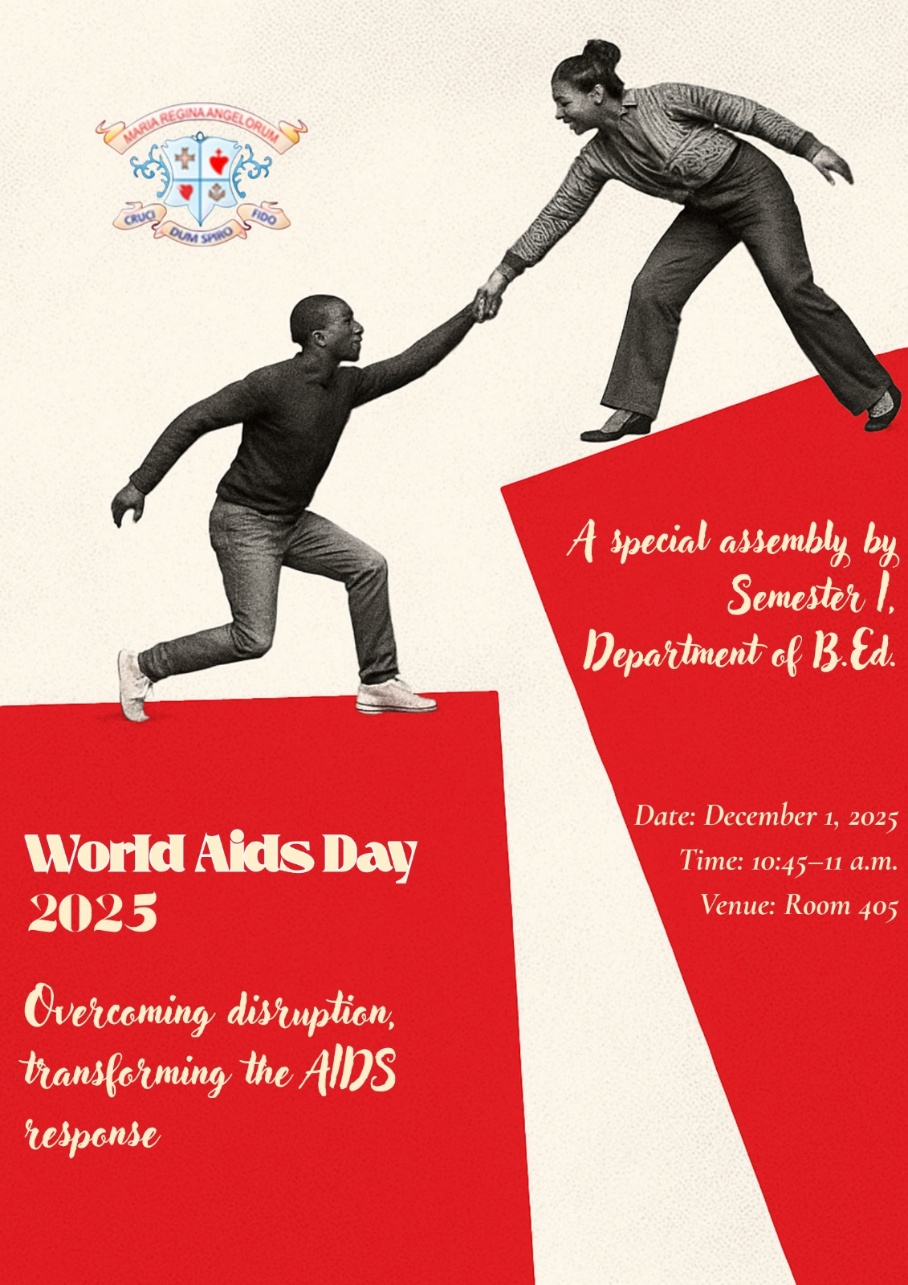
On 1 December 2025, the Semester 1 students from the Department of B.Ed. observed an assembly on World AIDS Day to raise and spread awareness. The programme began with a prayer, followed by a hymn. A PPT presentation was then shown, highlighting the significance of observing World AIDS Day and its direct impact on society. The assembly encouraged students to reflect on the importance of compassion, prevention, and collective responsibility in addressing HIV/AIDS.
Presentation Overview
The presentation explained when and why World AIDS Day was first celebrated in 1987 by WHO officers. It introduced the theme of World AIDS Day 2025, which is Overcoming Disruption, Transforming the AIDS Response, and emphasized the importance of observing this day. Global disruptions in testing, treatment, and support services continue to affect vulnerable and marginalised communities, highlighting the need to integrate HIV services into broader health systems. The day reinforces leadership, equity, human rights, and community-driven action. It is also a moment of solidarity, where people share experiences, remember those lost, and unite against HIV.
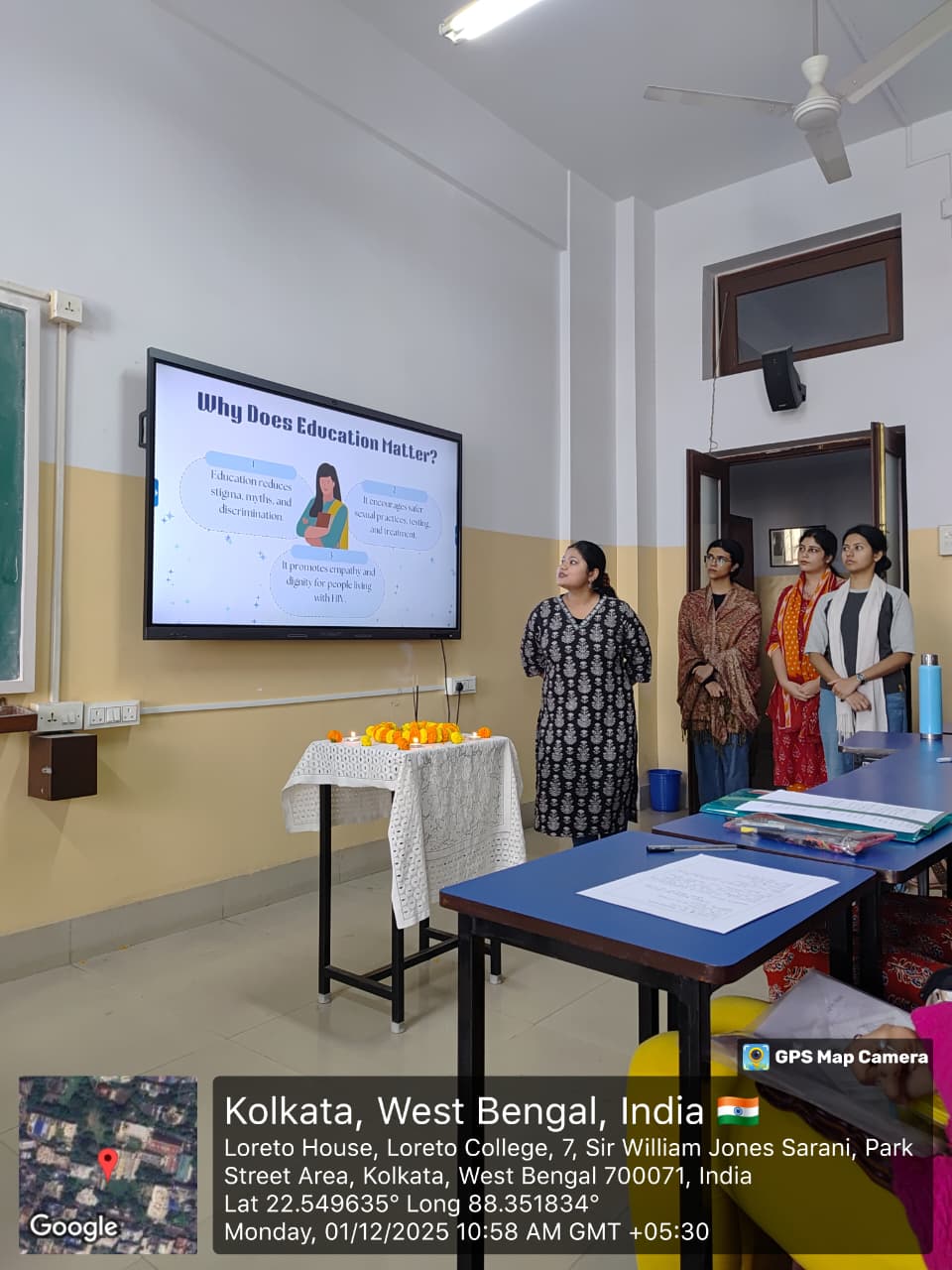
Education plays a vital role by reducing stigma, myths, and discrimination, encouraging safer practices, testing, and treatment, and promoting empathy for people living with HIV. Schools and colleges can host awareness programmes, organise competitions, collaborate with health organisations, use peer education, and integrate HIV topics into the curriculum.
Key Perspectives
World Aids Day is a reminder of solidarity, responsibility, and hope.
Each person-students, educators, citizens-can make a difference.
We must promote empathy, accurate information, and inclusion.
We should support one another and help build a world free of stigma and discrimination.
Conclusion
In conclusion, the presentation reinforced the need for sustained awareness, inclusive healthcare, and compassionate community action to combat HIV. By promoting education, reducing stigma, and supporting affected individuals, society can move toward a healthier, more equitable future. Observing World AIDS Day strengthens collective responsibility and inspires continued commitment to the AIDS response.


 ANNOUNCEMENTS