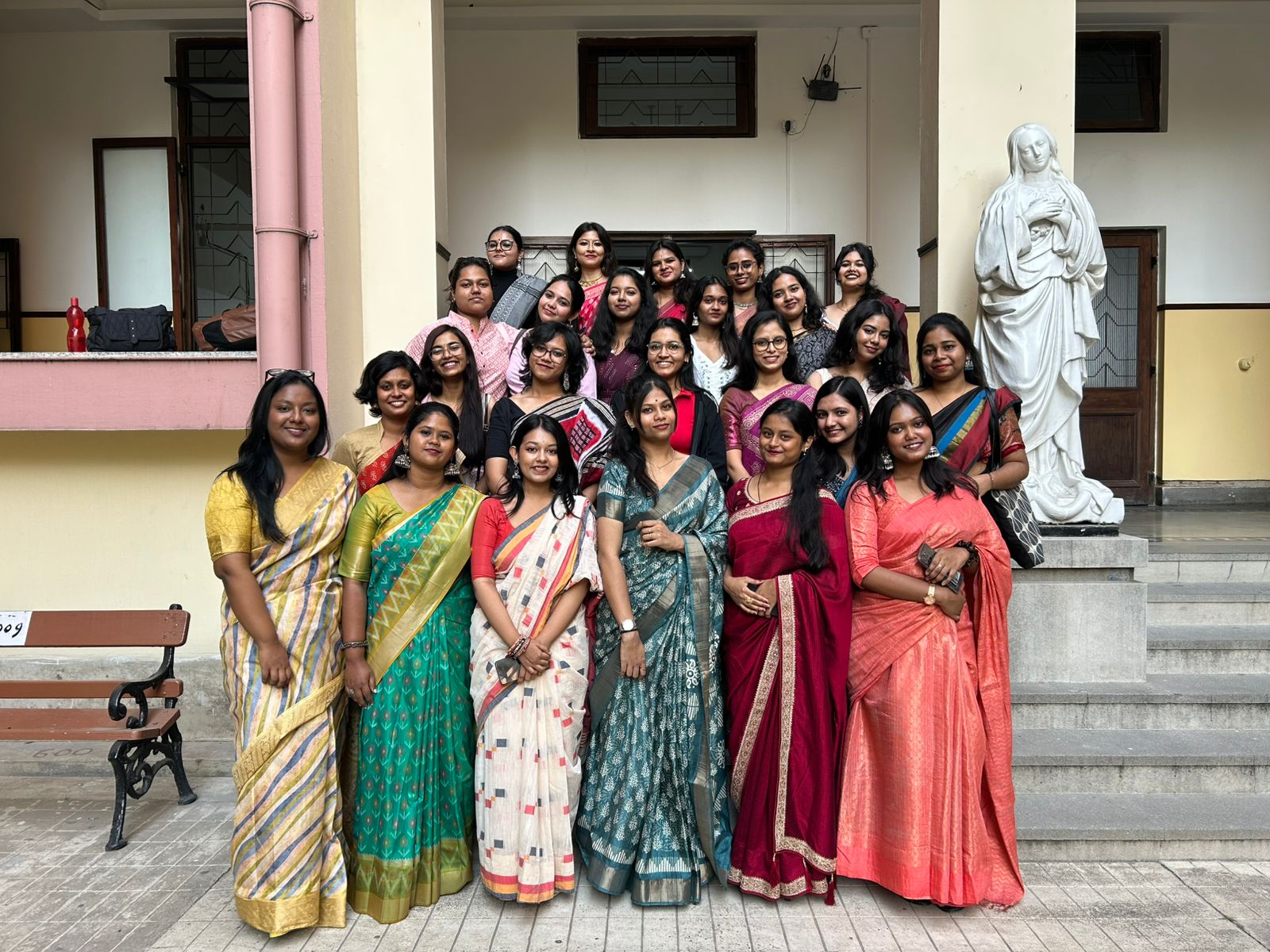
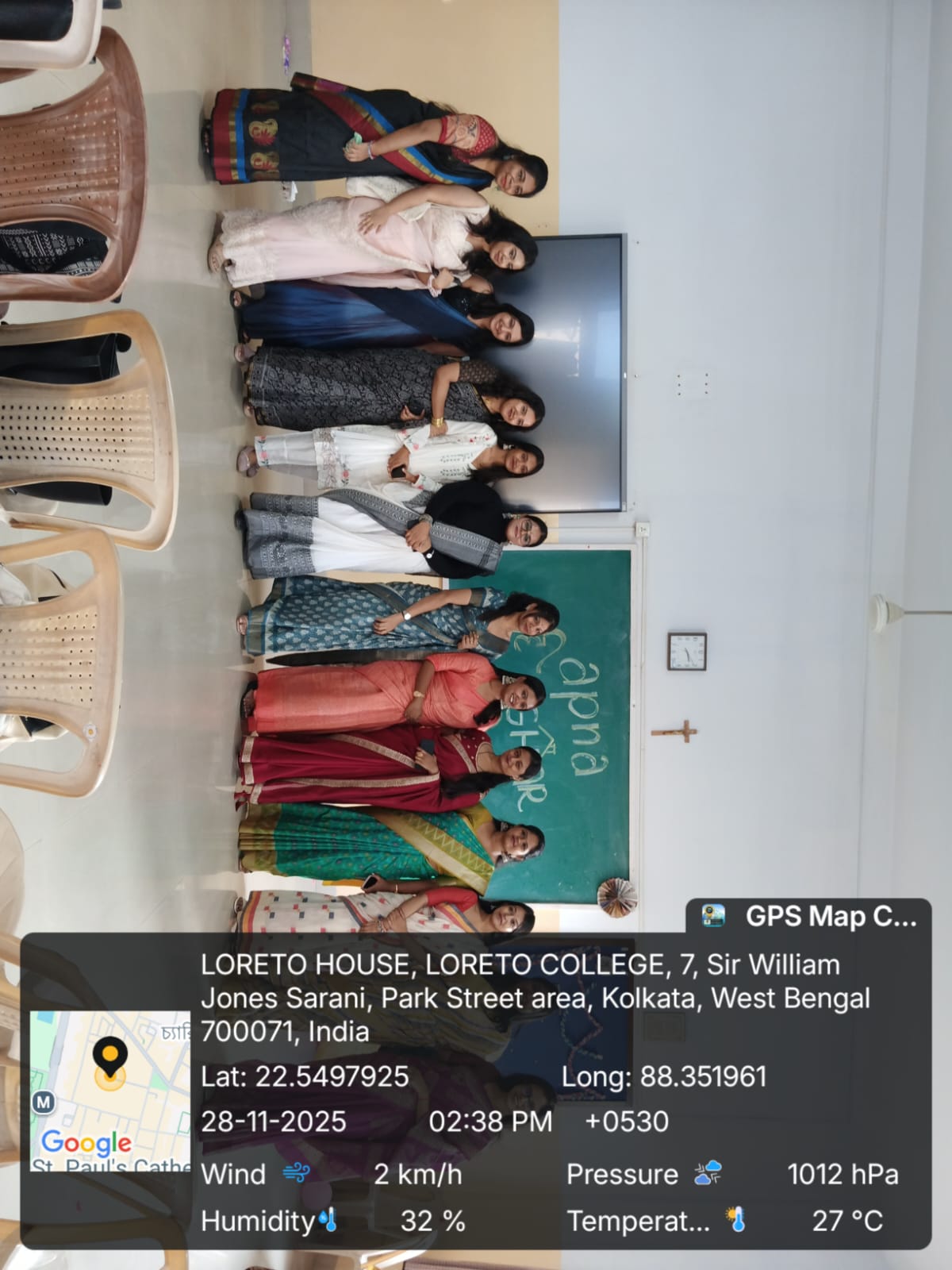
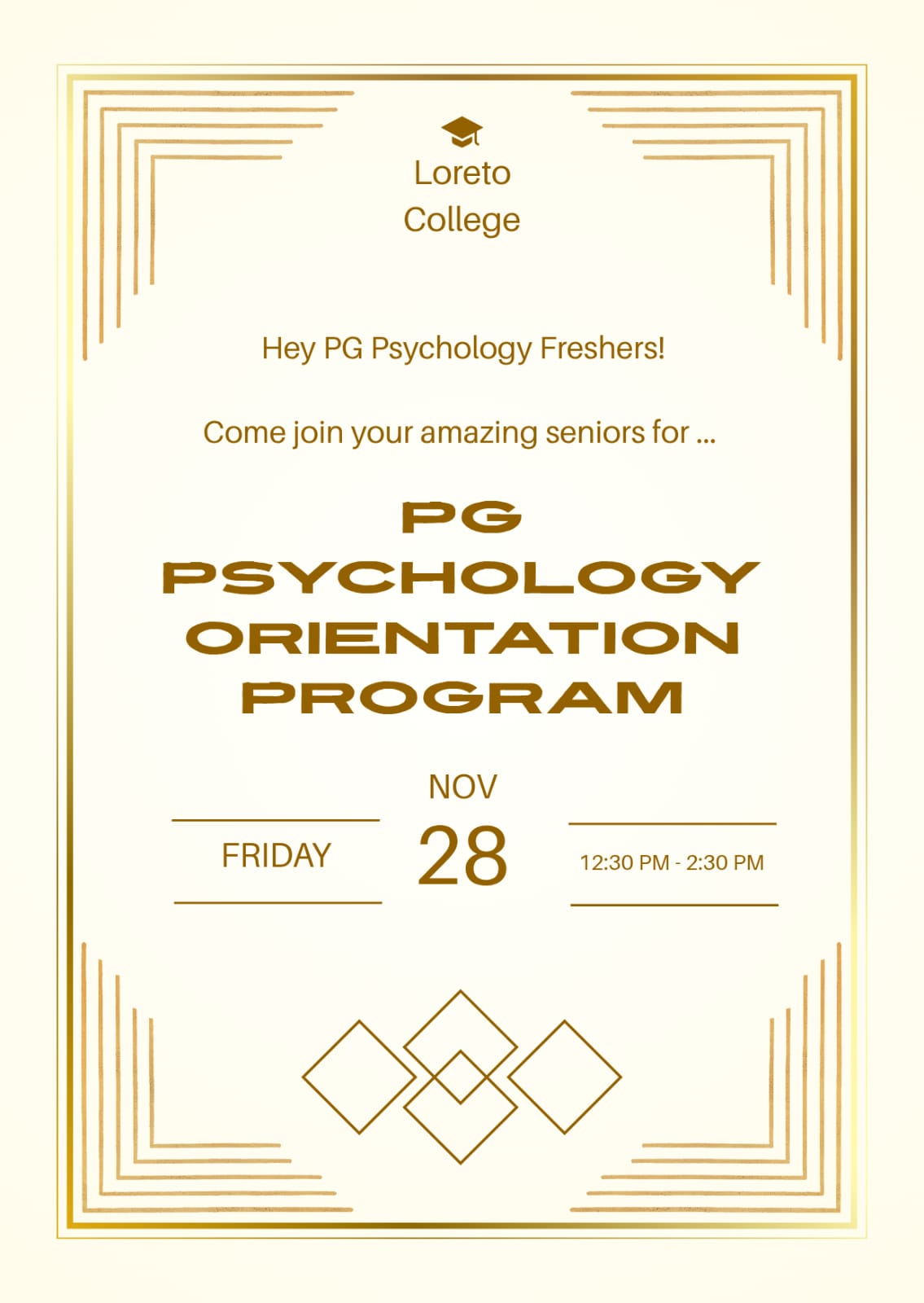
PG Psychology Orientation Program
The transition from an undergraduate to post-graduation courses and adjusting to the different demands, requirements, deadlines, time pressures is tough. Which is why the second year students of Department of Psychology - PG, organized an orientation program for the junior (1st year) batch of the PG Psychology department to help them in understanding and coping with the varied level of difficulties and expectations they will be facing in the coming two years from the teachers as well as from the department and college.
The PG Psychology Orientation Program was successfully organized to welcome and induct the incoming first-year postgraduate students into the academic, practical, and professional dimensions of the psychology curriculum. In a unique and enriching initiative, the second-year PG Psychology students took full responsibility for planning, coordinating, and conducting the event. Their involvement not only set a collaborative academic tone but also helped foster mentorship, peer learning, and ease of transition for the newcomers.
The program aimed to provide clarity on course expectations, curriculum structure, departmental culture, and skill-building demands, while also offering a space for interactive engagement through games, activities, and applied psychological tasks.
To acquaint first-year PG students with the course structure, curriculum expectations, and academic culture of the department.
To provide guidance from seniors on best practices, study strategies, and potential challenges in the program.
To conduct interactive activities that reinforce both undergraduate (UG) foundations and upcoming postgraduate (PG) requirements.
To foster a welcoming, student-friendly environment through fun elements like games, quizzes, and group tasks.
To encourage the development of peer networks, communication skills, and confidence among the newcomers.
The second-year students provided a comprehensive overview of the PG Psychology curriculum, including:
Core subjects in Semester I & II
Research methodology expectations
Practicum and field training
Internship structure
Dissertation requirements
Evaluation methods (internal assessments, practical exams, viva, and theory papers)
They elaborated on the interconnectedness between UG foundations and PG-level depth, clarifying how prior knowledge in areas such as biopsychology, cognitive psychology, social and positive psychology, and research methods would be expanded into advanced modules.
Seniors offered practical academic and behavioral guidelines, emphasizing:
Regular reviewing of concepts and continuous study habits
Maintaining updated notes, research articles, and psychology journals
Actively participating in class discussions, workshops, and practicum
Seeking faculty guidance whenever needed
Building strong research skills early on
Practicing empathy, patience, and professional ethics in applied settings
Forming study groups for collaborative learning
They also clarified common pitfalls:
Avoiding last-minute submissions and procrastination
Not relying solely on UG knowledge for PG-level expectations
Avoiding memorization without conceptual understanding
Not depending passively on others for assignments or research
Avoiding unethical academic practices like plagiarism
Avoiding overcommitment to extracurriculars at the expense of academics
To maintain a light and welcoming atmosphere, the seniors conducted engaging games and group activities, intentionally structured to integrate psychological concepts.
These helped the freshers open up, introduce themselves, and become comfortable:
"Two Truths and a Lie - Cognitive Bias Edition"
Personality-based pairing games
Memory chain introductions
A short quiz was organized based on UG-level fundamentals (e.g., theorists, schools of thought, basic research design), foundational psychological phenomena, famous experiments and their implications etc. Simple prizes were awarded to winners to encourage enthusiastic participation.
Feedback and Response:
Both first-year and second-year students expressed extremely positive feedback:
Freshers appreciated the clarity, friendliness, and support provided.
The interactive tasks were described as engaging, confidence-building, and insightful.
Conclusion
The PG Psychology Orientation Program proved to be an informative, interactive, and meaningful experience for all participants. By allowing second-year students to lead the initiative, the department fostered a peer-supported learning environment that bridged academic, social, and practical elements of the course.
The blend of curriculum explanations, experiential activities, and community-building exercises ensured that the first-year students began their academic journey with confidence, clarity, and a strong sense of belonging.


 ANNOUNCEMENTS